Clinical Diagnostics
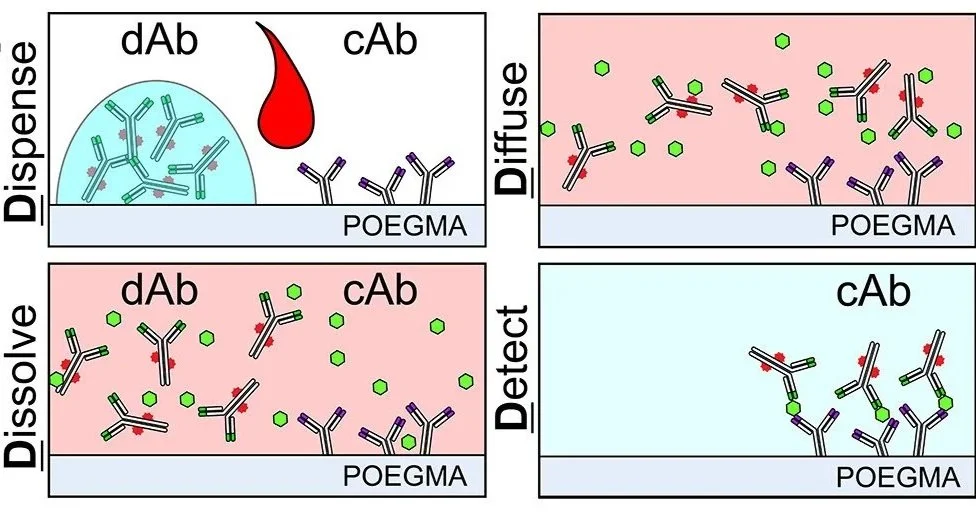
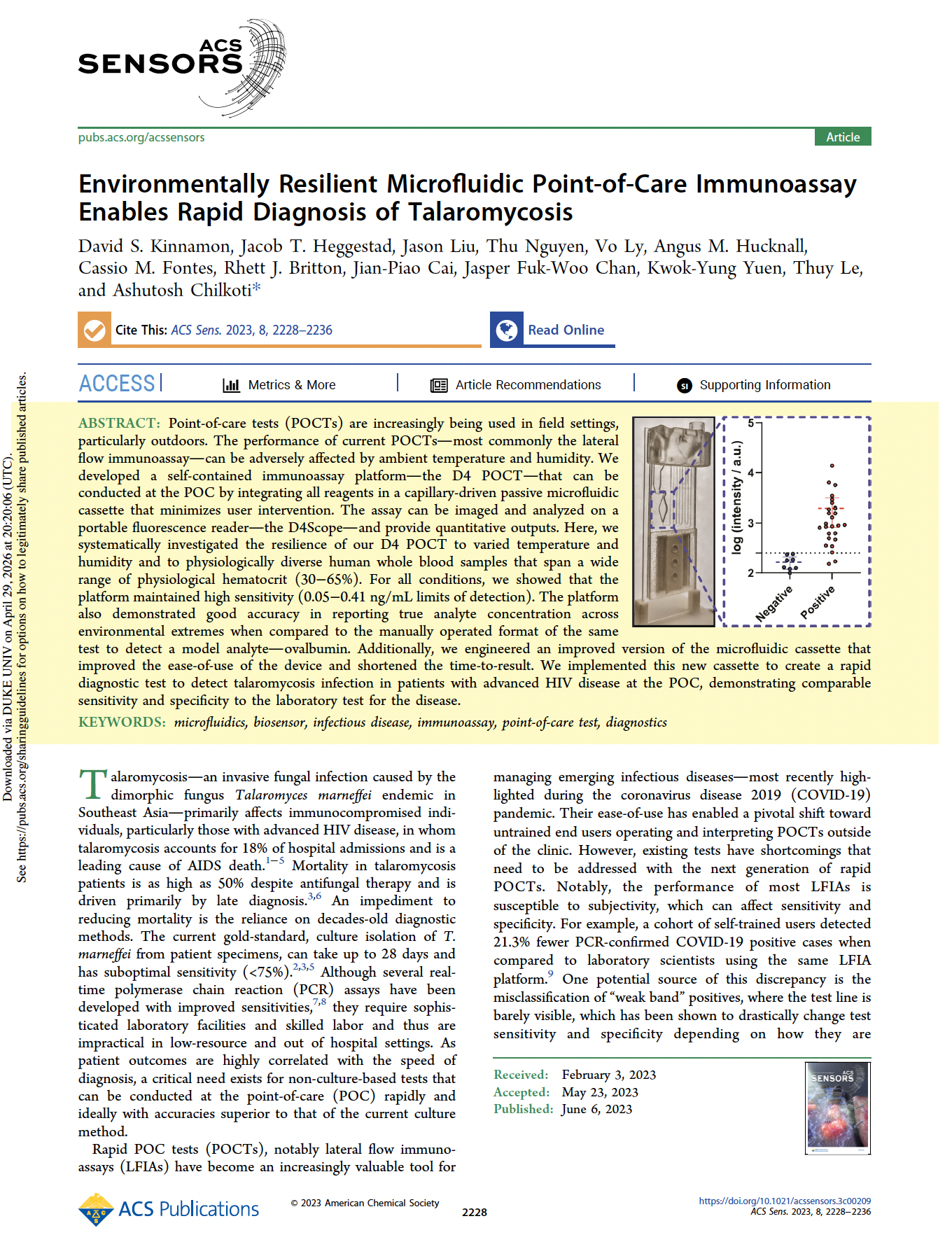
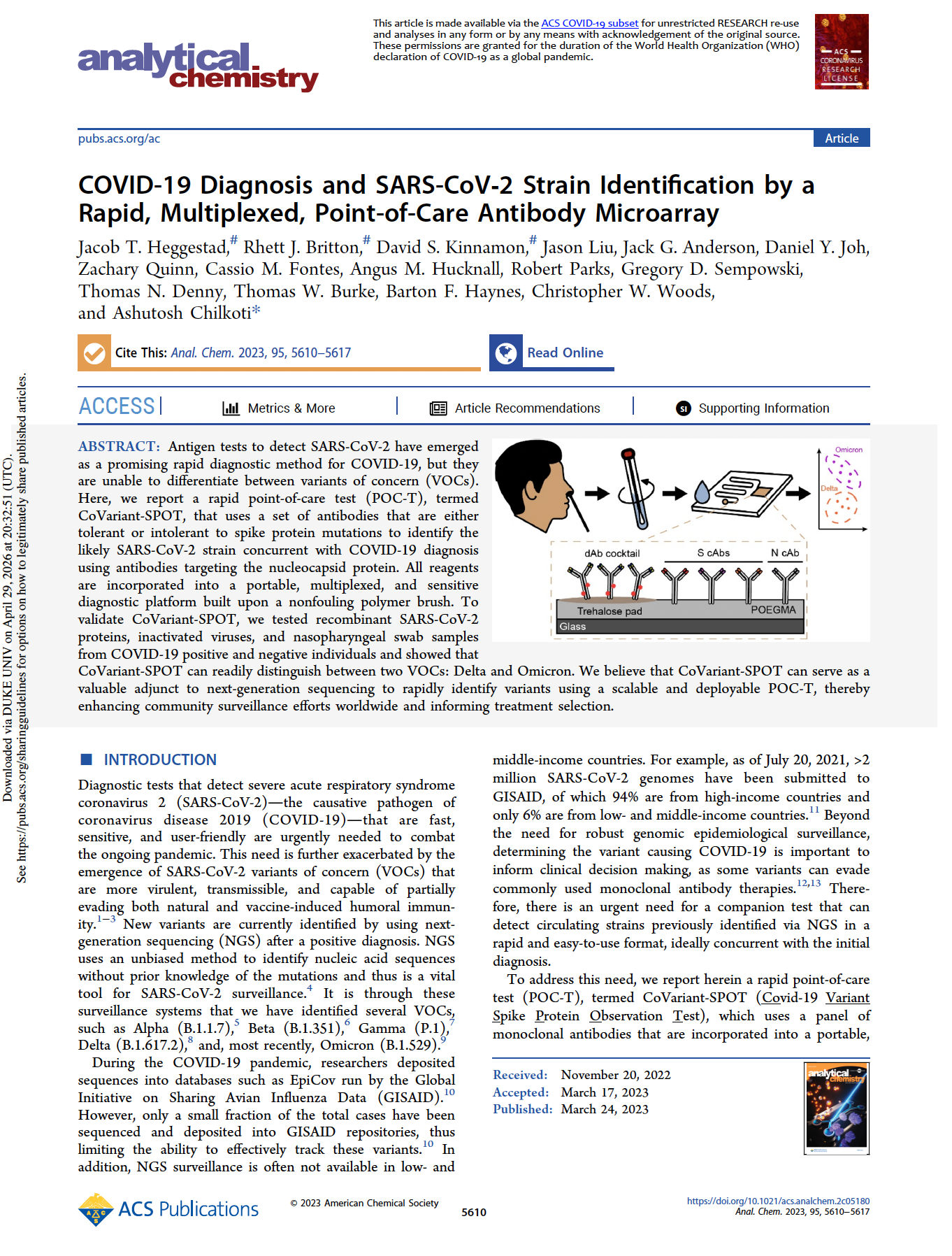
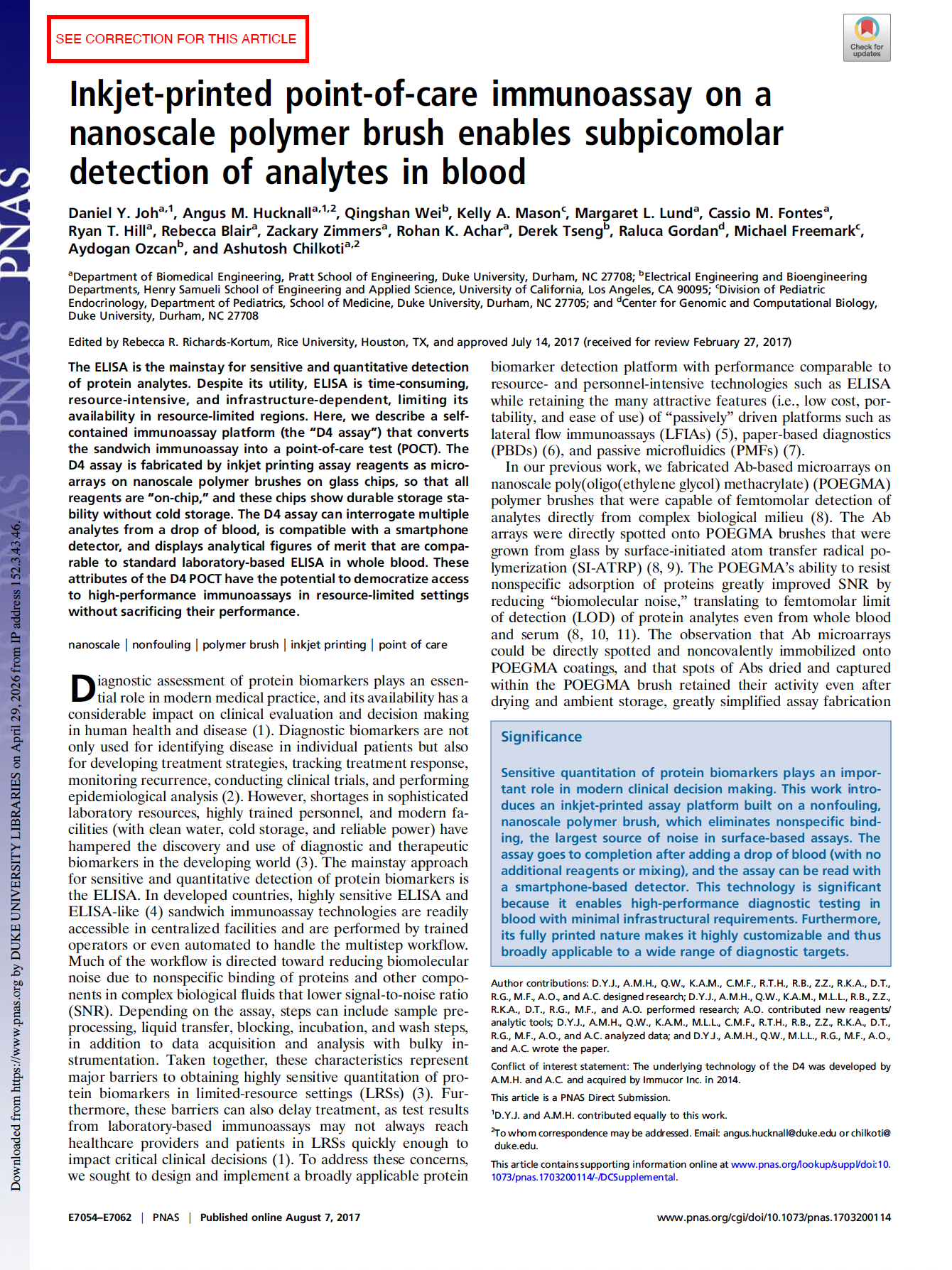
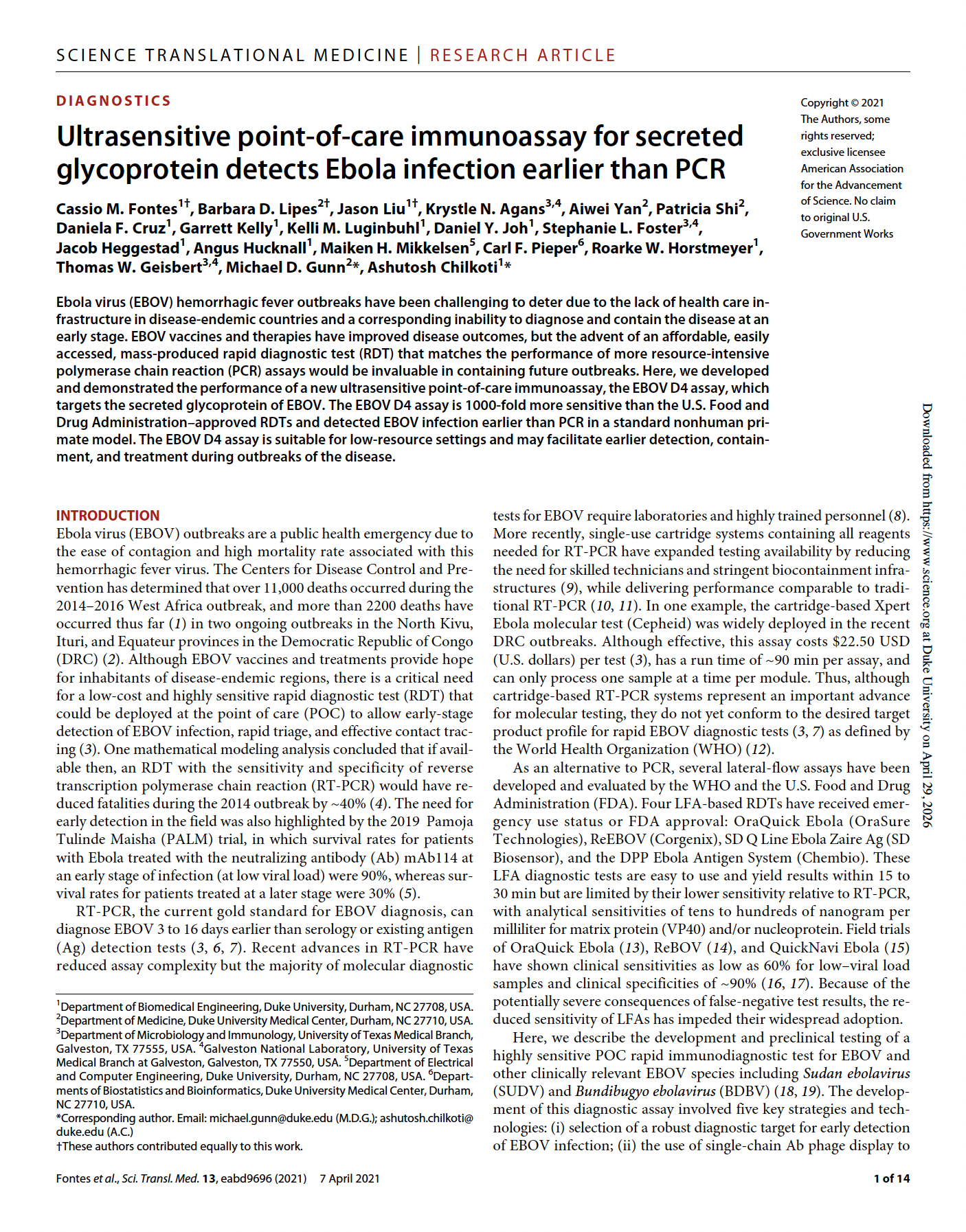
Our work in clinical diagnostics focuses on the development of the D4 assay, a point-of-care diagnostic test. The assay consists of four events –1) Dispensing of a droplet of blood, 2) Dissolution of printed reagents on the chip, 3) Diffusion of reagents across the surface, and 4) Detection of bound capture antibodies – and yields quantitative results, with picomolar sensitivity within 30 minutes. The D4 assay can be used for the diagnosis of all markers for which antibody pairs are available with a speed and sensitivity matches or exceeds commercially available point-of-care tests and is simpler, cheaper, and cold chain independent. The interface of the D4 assay is a POEGMA brush coating that is grown for the surface of glass by surface-initiated polymerization that leverages the nonfouling properties of the brush to provide exceptional sensitivity, even in complex matrices like whole blood.
We are interested in further developing all aspects of the D4 assay in order to enable eventual field deployment. Currently, we are interested in engineering microfluidic cartridges through prototyping methods like 3D printing, laser cutting, and injection molding to handle more diverse assay formats and complex sample types; expanding assay functionality by generating novel antibody, affibody, and avimer binders through phage and yeast display technologies; and incorporating ML-driven analysis to leverage D4 assay platform signal data to answer questions that otherwise require genomic sequencing.
Key Publications