Genetically Encoded Biomaterials
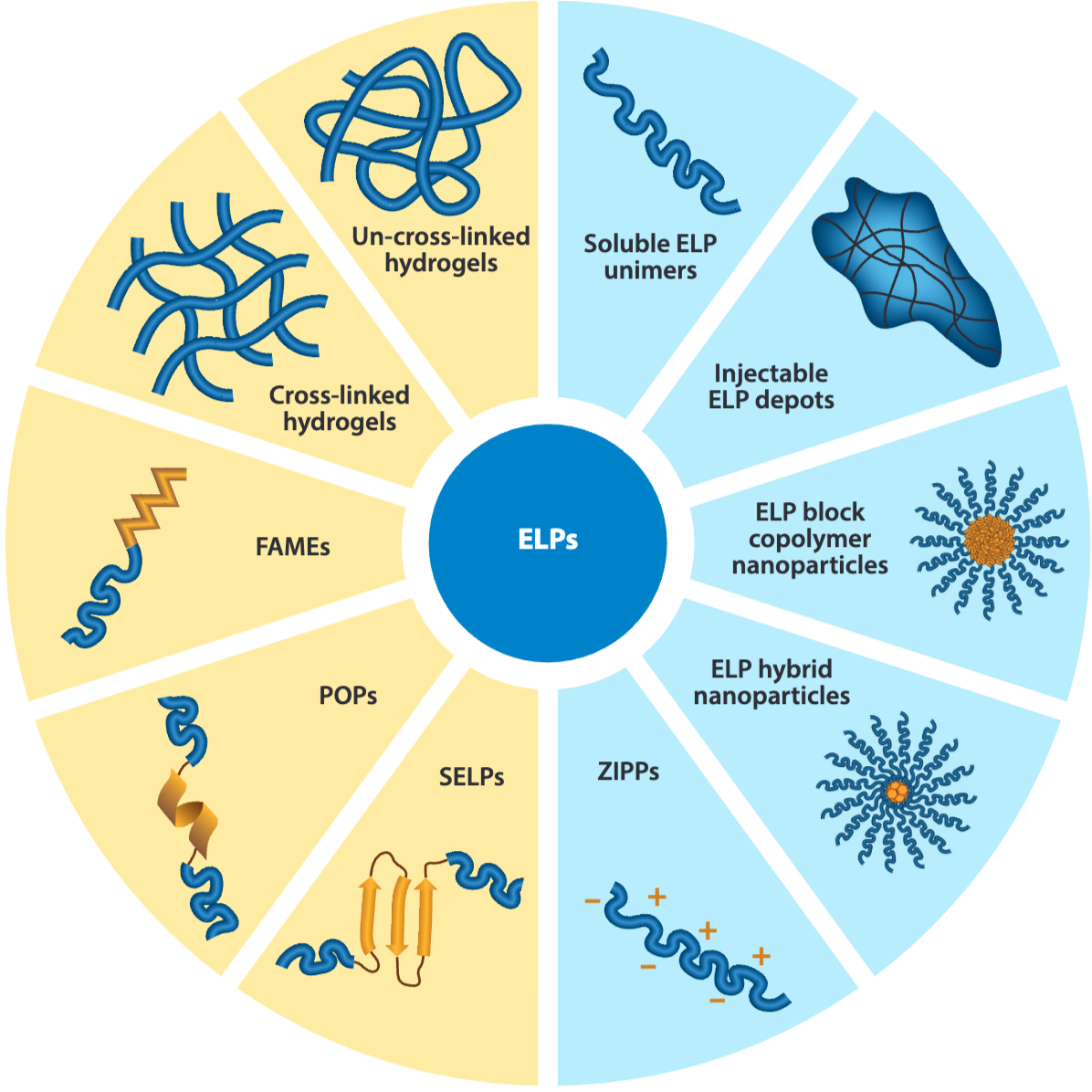
Our research in genetically encoded biomaterials focuses on intrinsically disordered proteins (IDPs). One class – elastin-like polypeptides (ELPs) – are polymers of a Val-Pro-Gly-Xaa-Gly motif found in tropoelastin that display a tunable lower critical solution temperature (LCST). Because of their tunable phase behavior and minimal immunogenicity, ELPs are attractive materials for a wide variety of biomedical applications; additionally, their recombinant synthesis and genetically encoded design enables complete control over its its structure and function.
Find a few of the ways our lab has leveraged ELPs for a wide range of drug delivery, biotechnology, and tissue engineering applications below:
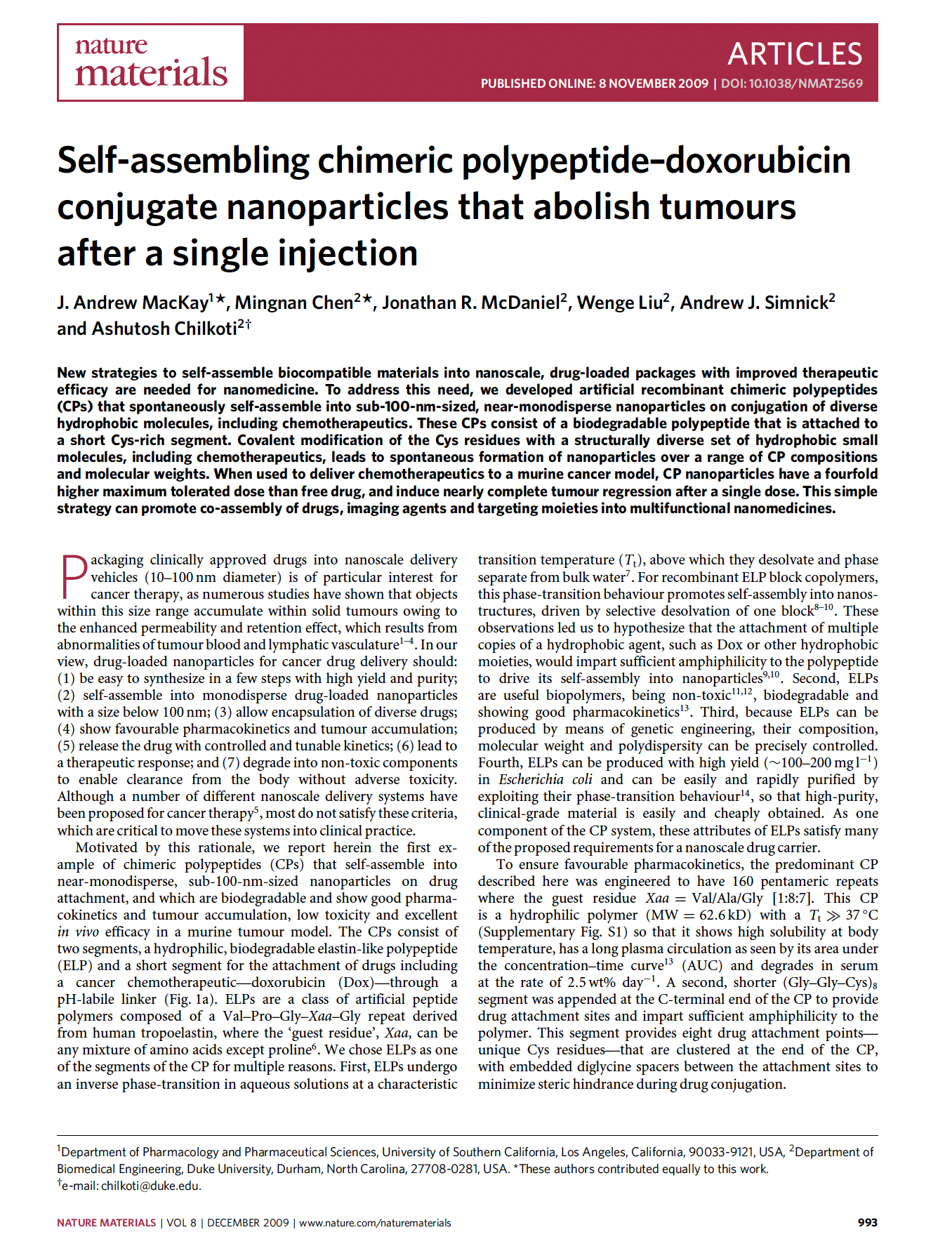
In drug delivery, we have pioneered the development of ELP nanoparticles and polypeptide depots. We first demonstrated that attachment of hydrophobic drugs to a stimulus responsive polymer can spontaneously trigger self assembly into drug-loaded nanoparticles; recently, we have also demonstrated that the phase transition of stimulus responsive polymers can be triggered in vivo, leading to development of injectable depots for the sustained delivery of biologics like peptide drugs and immunomodulators. These technologies have led to ~40 patents and patent applications, some of which are currently in Phase 2 clinical trials, and we are interested in further leveraging of ELP properties to enable sustained delivery of therapeutics.
Drug Delivery
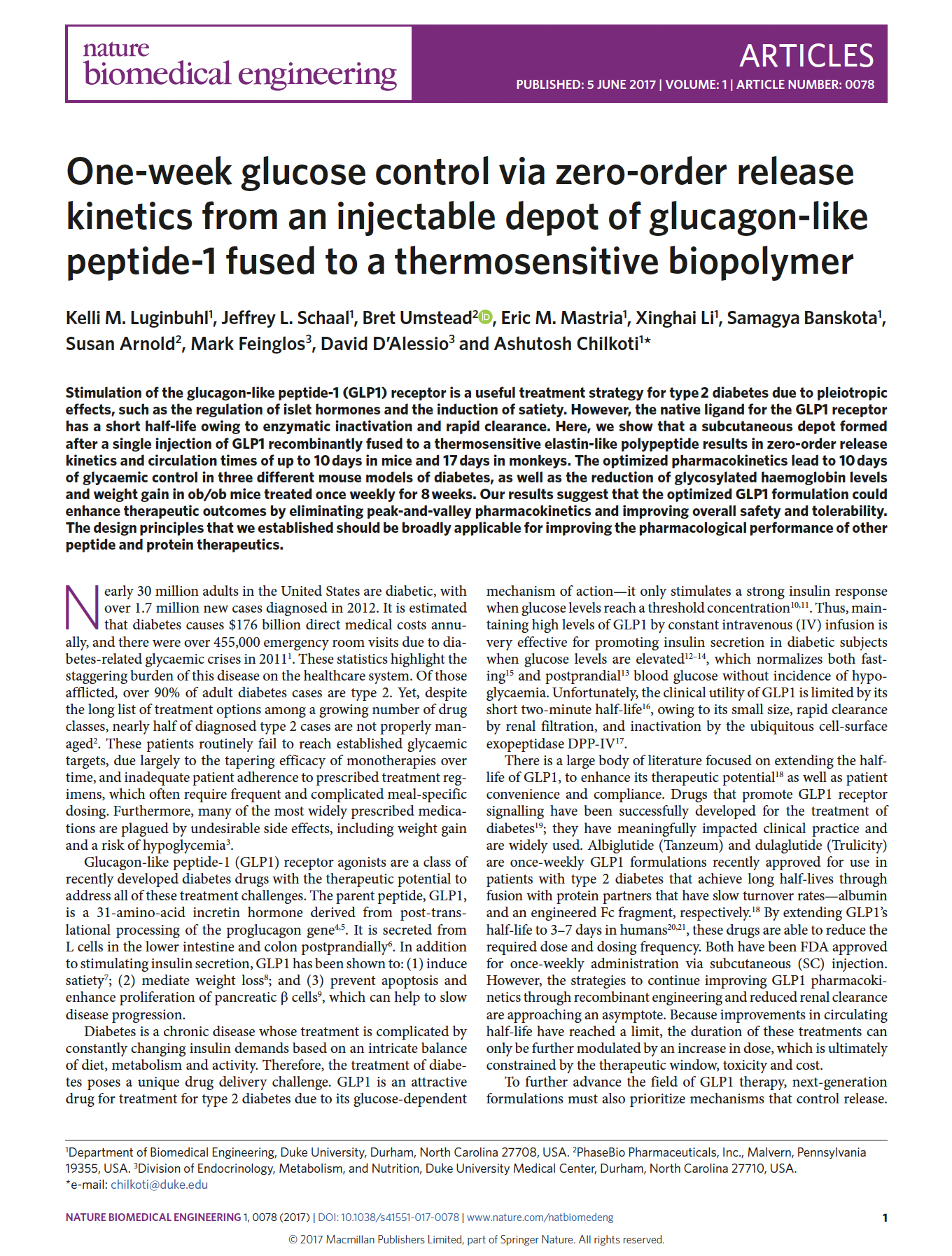
In recombinant biomaterials, we have developed partially ordered polymers (POPs) that are soluble at room temperature but undergo temperature-triggered hierarchical self-assembly at body temperature to form a highly porous, fractal-like network solid. These POPs can be injected in vivo as a solution and become solid, and are highly biocompatible as they rapidly integrate with surrounding tissue, elicit a minimal inflammatory response, and exhibit excellent vascularization. We are currently exploring POPs as an avenue for nerve and bone repair.
Recombinant Biomaterials
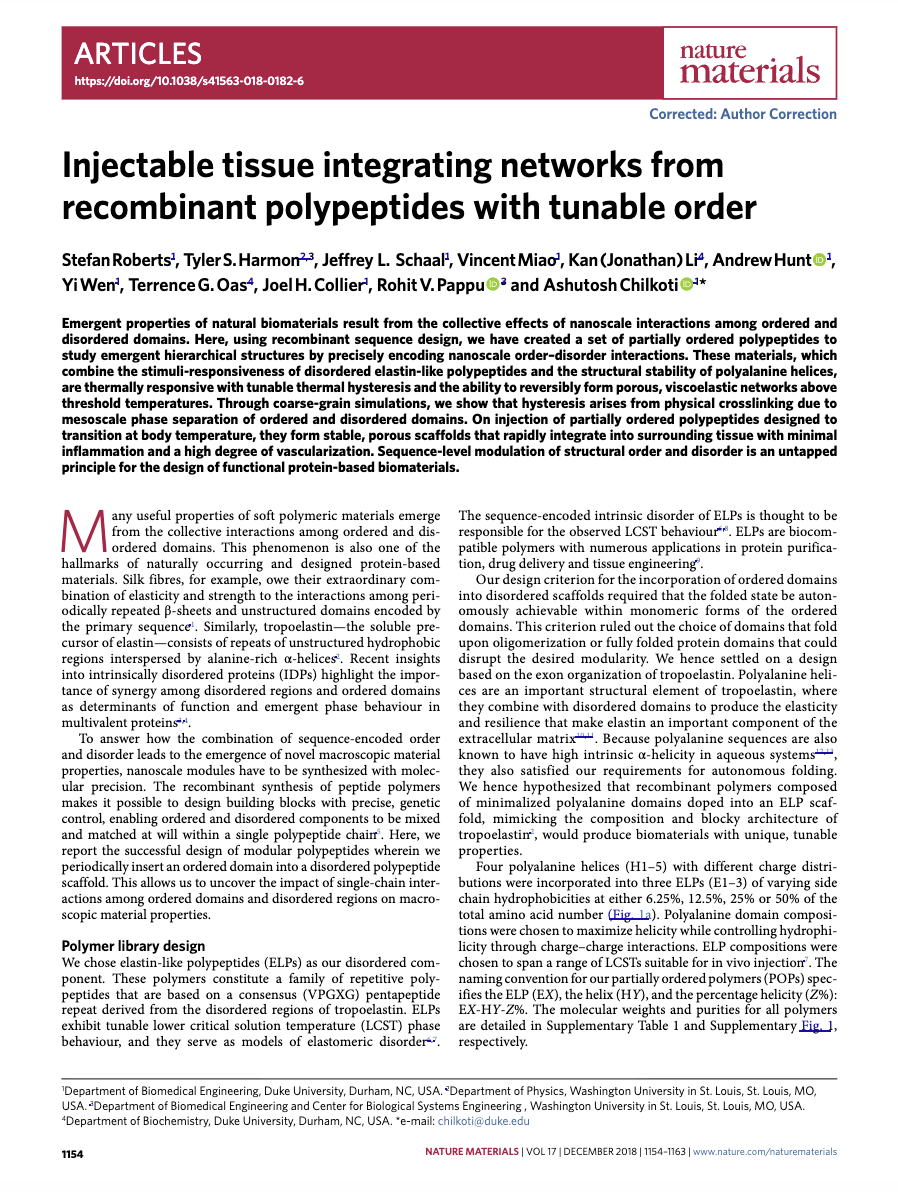
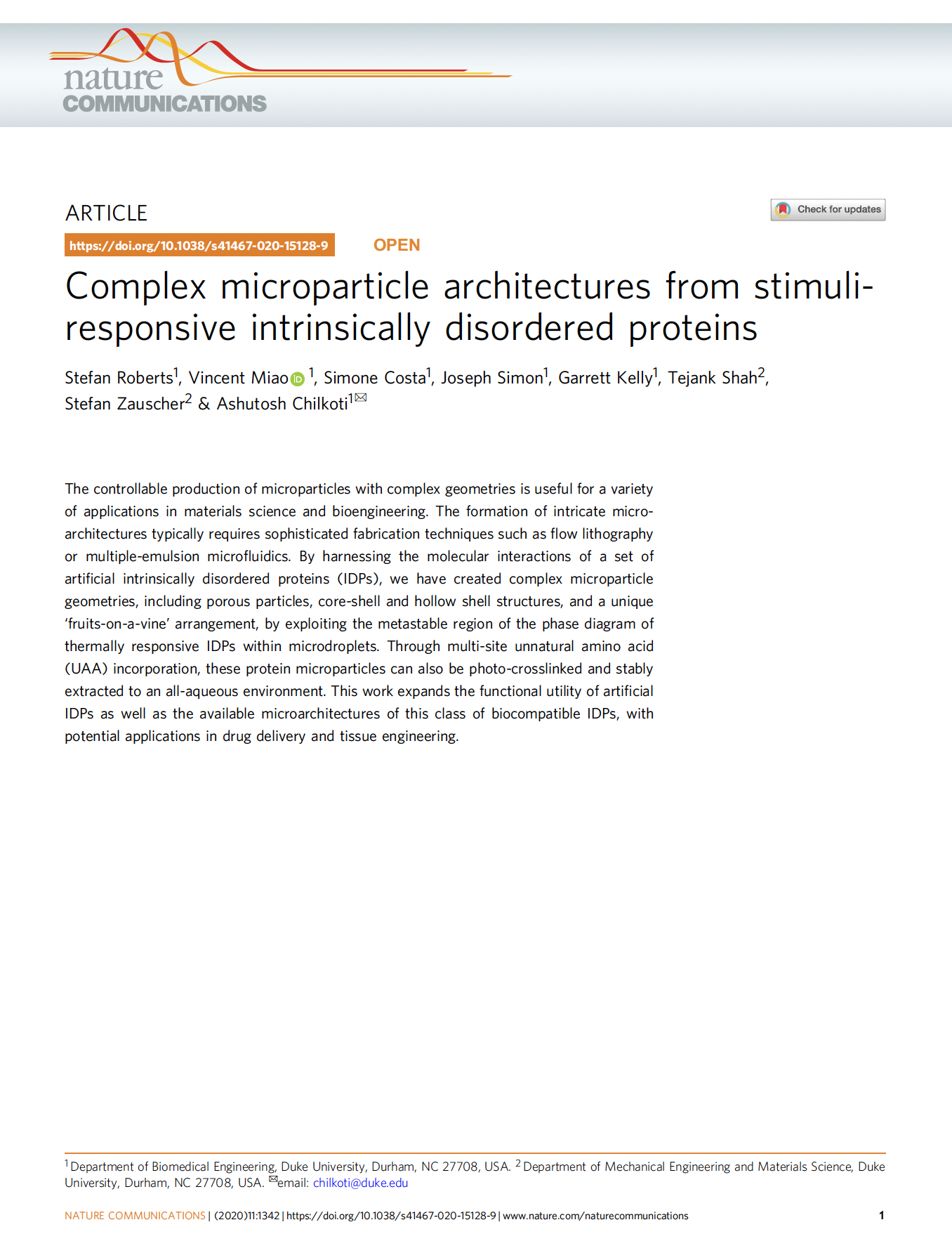
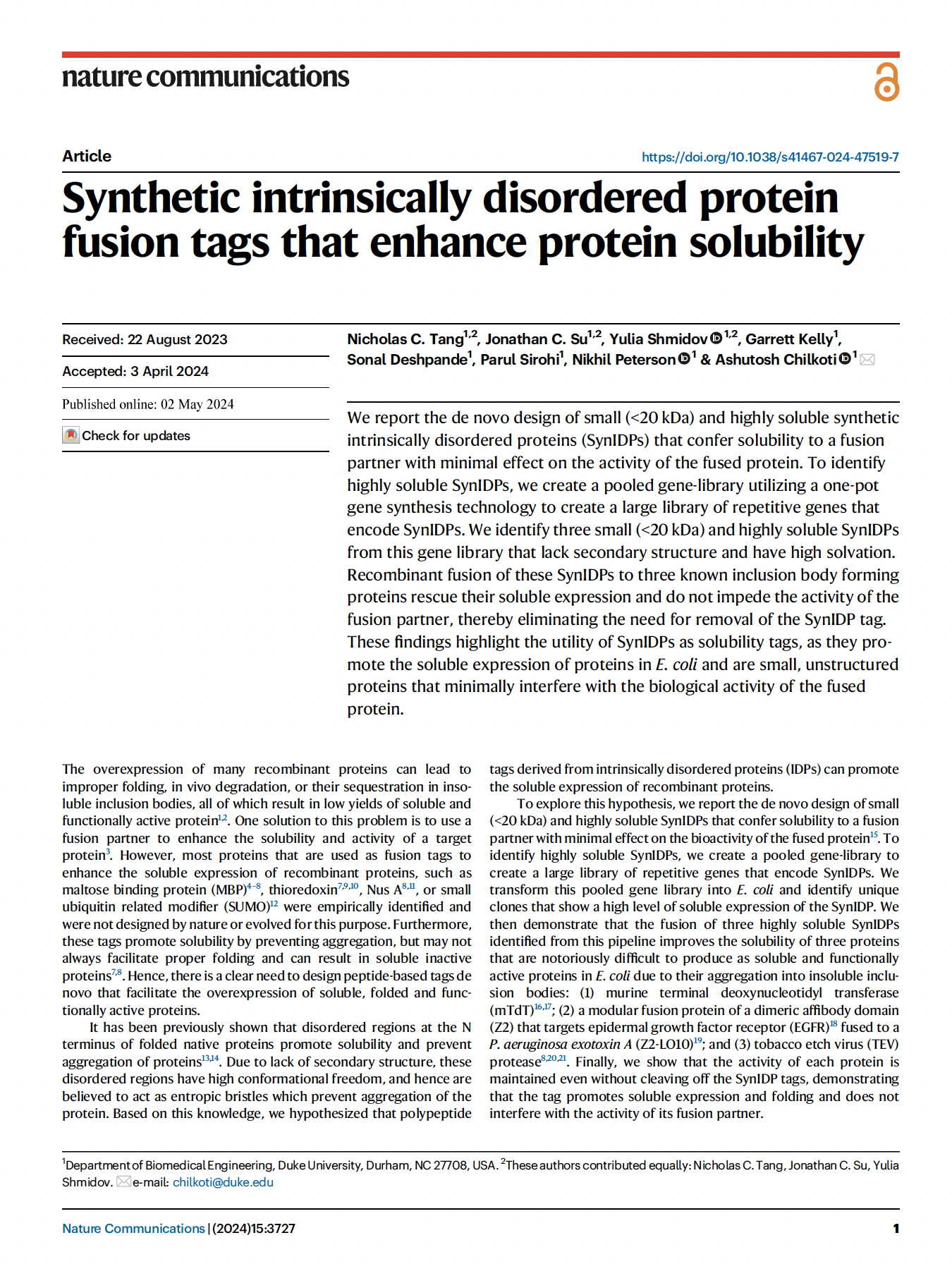
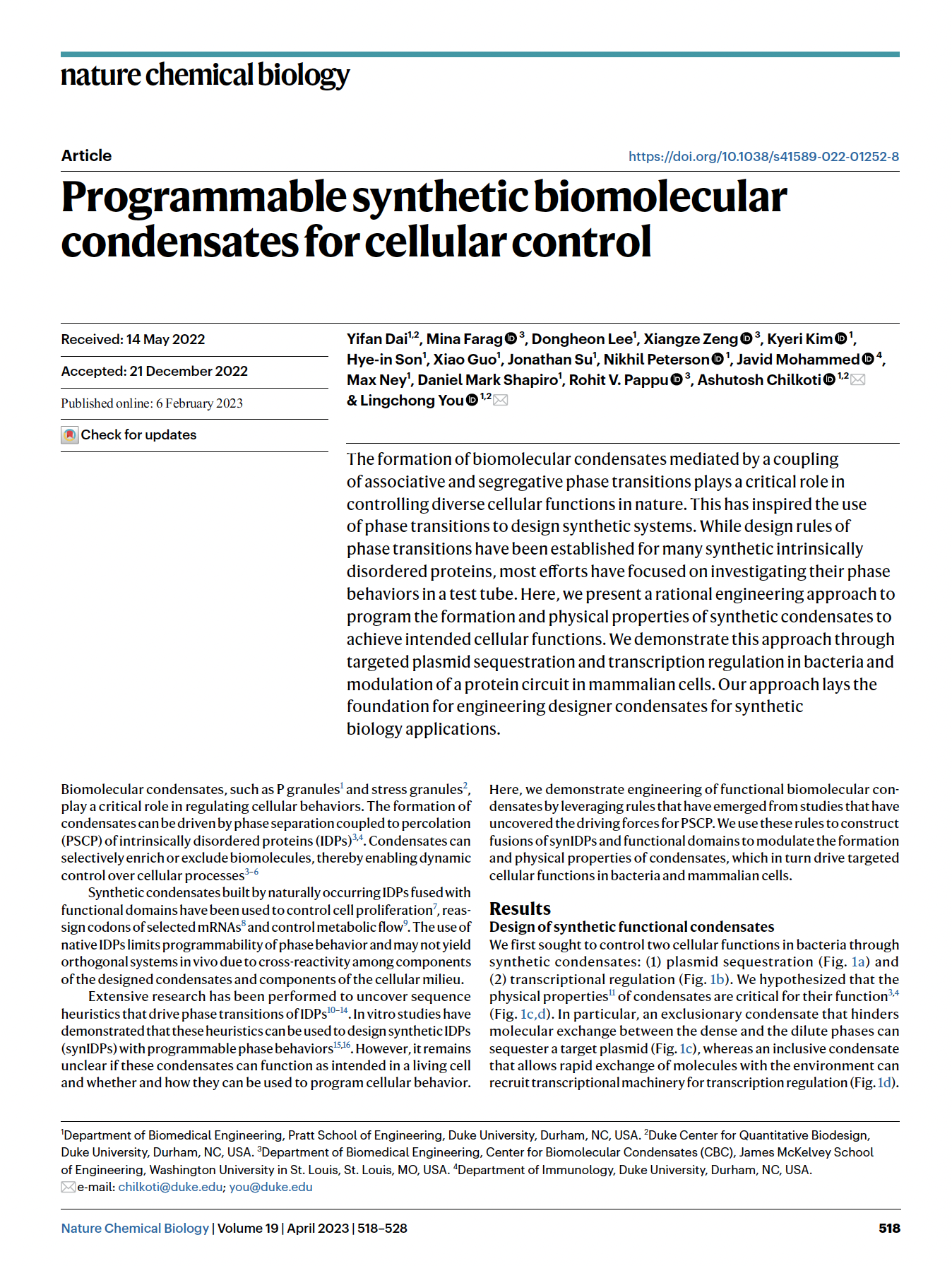
Intrinsically disordered proteins (IDPs) are a class of unstructured proteins that play a key role in the formation of biomolecular condensates - membraneless organelles - in cells. We have developed elastin-like polypeptides (ELPs) and resilin-like polypeptides (RLPs), two classes of synthetic IDPs. Previously, we have focused on investigating how sequence and architecture of synthetic IDPs and fusion IDPs to folded and functional proteins domains dictate their phase behavior. Our work now focuses on the design of artificial biomolecular condensates to spatiotemporally control the flow of genetic information and biochemical signals.
Engineered Biomolecular Condensates
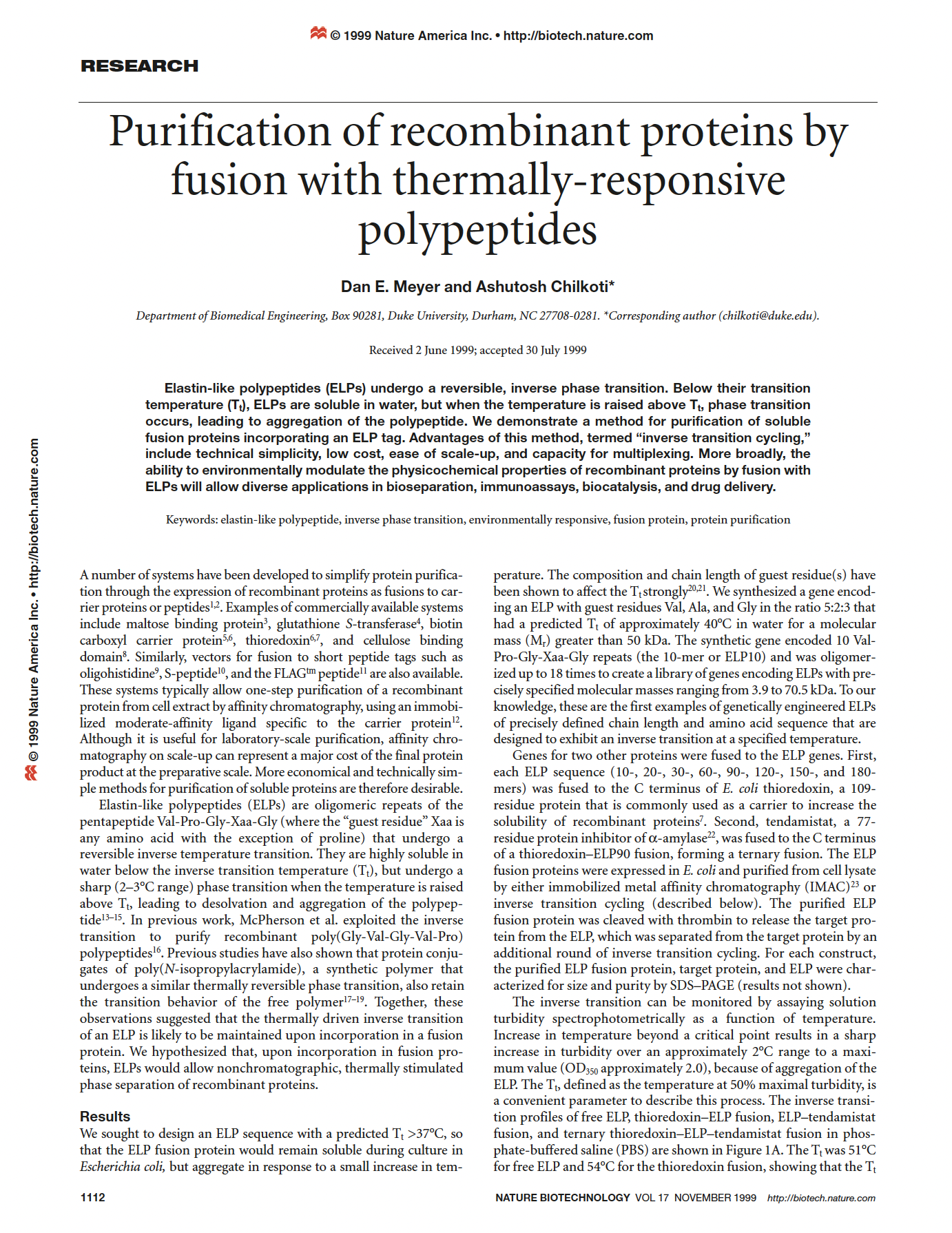
In the past, we have demonstrated that proteins fused to a stimulus responsive ELP retain their phase transition behavior, which has led to the development of a new non-chromatographic process for purification of recombinant proteins. This technology provides a convenient methodology to over-express and purify peptide and protein pharmaceuticals. Since then, this technology has been distributed to labs worldwide and led the formation of Isolere Bio, acquired in 2022 by Donaldson Inc., for the commercialization of viral vector purification for gene therapy.
Are you purifying ELPs through ITC? Find our protocol here
Biotechnology